


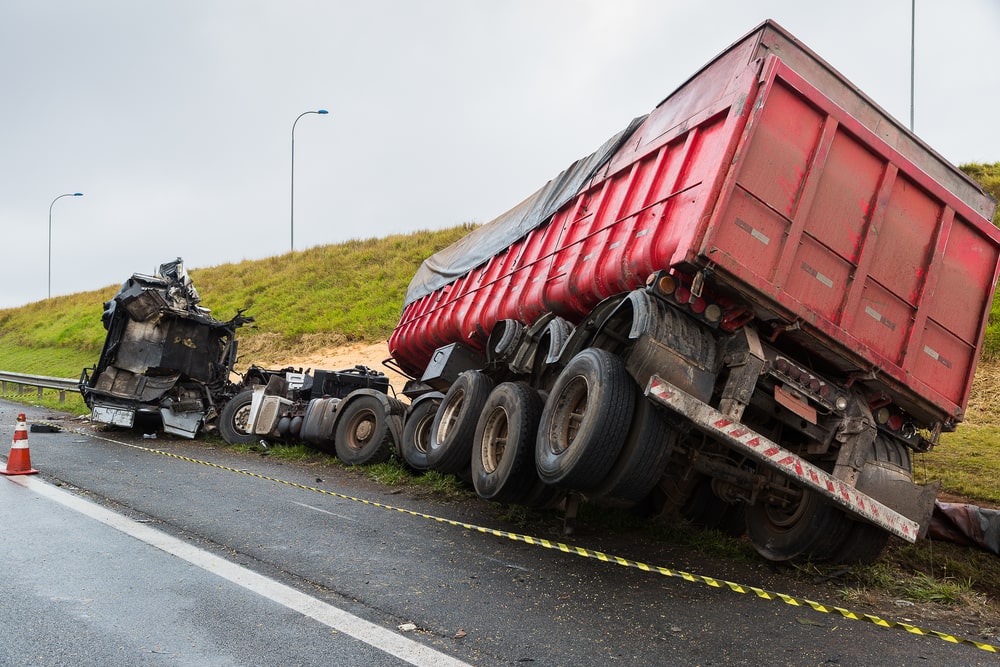
A jackknife accident happens when a truck’s trailer swings out to the side, forming a V-shape or an angle that resembles a folding pocket knife. The cab and trailer aren’t aligned anymore. The driver lost control of the entire vehicle.
These accidents often block multiple lanes of traffic. They can pull several other vehicles into devastating collisions. At The Andres Lopez Law Firm, we’ve handled numerous cases involving jackknifed commercial trucks, and understanding what causes these accidents makes a real difference in protecting your rights after a collision.
What Causes A Truck To Jackknife?
Several factors can cause a trailer to swing out of control. Most involve driver actions, equipment failures, or dangerous road conditions.
Sudden braking is a leading cause. When a truck driver slams on the brakes too hard or too quickly, the trailer’s momentum pushes it forward and sideways. The cab wheels lock up while the trailer keeps moving. That’s when you get that dangerous fold.
Speeding amplifies every risk factor. A truck traveling too fast for conditions has less time to react and needs more distance to stop safely. Go faster, and hard braking becomes far more likely to cause the trailer to lose traction and swing out.
Improper braking techniques matter more than most people realize. Truck drivers receive specific training on how to brake a commercial vehicle properly. Fail to use engine brakes, over-rely on service brakes, or brake unevenly between the tractor and trailer? Any of these can trigger a jackknife.
Equipment and maintenance failures also play a role:
- Worn or malfunctioning brakes that don’t apply evenly
- Faulty anti-lock braking systems
- Improper brake adjustment between the tractor and trailer
- Tire blowouts or severely worn tires
- Defective brake components
Road conditions compound the danger. Wet pavement reduces traction. So do oil slicks, ice, and loose gravel. Florida’s frequent rain showers create particularly hazardous conditions for heavy trucks on highways like I-95 and the Florida Turnpike.
Improperly loaded or unbalanced cargo shifts the truck’s center of gravity. When weight distribution is off, the trailer becomes much harder to control during braking or turning maneuvers.
Who Can Be Held Liable For A Jackknife Accident?
Determining fault in a jackknife accident often involves investigating multiple parties. Liability isn’t always straightforward. More than one entity may share responsibility, and figuring out who’s accountable requires digging into the details.
The Truck Driver
Driver error is the most common cause of jackknife accidents. A driver can be held liable for:
- Driving too fast for the road or weather conditions
- Following other vehicles too closely
- Failing to adjust speed before curves or exits
- Sudden or improper braking
- Distracted or fatigued driving
- Violating hours of service regulations
Even if road conditions contributed to the accident, drivers have a duty to operate their vehicles safely, given the circumstances. That means slowing down in the rain. Maintaining proper following distance. Using appropriate braking techniques. It’s not optional.
The Trucking Company
Companies that own and operate commercial trucks can be held responsible through several legal theories. They may be directly liable for negligent hiring if they put an unqualified or dangerous driver behind the wheel. Training failures also fall on the company when drivers haven’t received proper instruction on preventing jackknife accidents.
Companies are responsible for maintaining their fleets. If brake systems weren’t inspected, repairs were delayed, or maintenance records show a pattern of neglect, the company bears responsibility for accidents caused by equipment failure.
Federal regulations require trucking companies to follow strict maintenance schedules and keep detailed records. The Federal Motor Carrier Safety Administration sets these standards. Violations can establish liability in injury claims.
Maintenance Providers
Third-party maintenance companies can be liable if they perform substandard repairs or fail to identify dangerous equipment problems. Was the brake system recently serviced but failed during normal operation? The maintenance provider may share fault for the resulting accident.
Cargo Loading Companies
Separate companies often handle loading and securing cargo. When improper weight distribution or unsecured loads contribute to a jackknife, these entities can be brought into the liability equation. They don’t get a pass just because they weren’t driving.
Vehicle Or Parts Manufacturers
Defective braking systems cause accidents. So do faulty ABS components or tire failures caused by manufacturing defects. When this happens, manufacturers can be held liable. These cases require technical analysis and often involve product liability claims alongside traditional negligence theories.
Why Jackknife Accidents Cause Severe Injuries
The physics of a jackknifed truck create multiple dangers. The trailer can sweep across several lanes, striking vehicles on either side. Cars traveling behind the truck have little time to react before colliding with the broadside of the trailer.
When the trailer blocks the roadway perpendicular to traffic, approaching vehicles often can’t stop in time. The impact forces involved in hitting a commercial trailer at highway speeds frequently result in catastrophic injuries or fatalities.
Secondary collisions compound the danger. Once the initial jackknife occurs, other vehicles may collide with each other trying to avoid the disabled truck. Some get struck by the still-moving cab or trailer. It becomes chaos in seconds.
Building A Strong Case After A Jackknife Accident
Proving fault in these cases requires a thorough investigation. We work with accident reconstruction specialists who analyze skid marks, vehicle positions, and road conditions to determine what happened and why. They’re good at their jobs, and they don’t guess.
Electronic logging devices and event data recorders in modern trucks capture speed, braking, and other operational data in the moments before a crash. This information often contradicts driver statements. It reveals the true cause of the jackknife, and it’s hard to argue with recorded data.
Maintenance records matter. So do driver logs and company policies. All of it becomes part of the evidence picture. Trucking companies must preserve this documentation after serious accidents, and taking quick legal action protects your access to these materials before they conveniently disappear or get “lost.”
Moving Forward After A Jackknife Collision
If you’ve been injured in an accident involving a jackknifed commercial truck, understanding the cause and identifying all responsible parties becomes the foundation of your recovery. These cases involve multiple insurance policies. Corporate legal teams. Technical evidence that requires experienced handling.
Our Fort Lauderdale truck accident lawyer team knows how to investigate jackknife collisions, preserve necessary evidence, and hold all responsible parties accountable. We can review what happened in your case and explain your options for pursuing the compensation you deserve.